




An interview with Tereza Belinova
A series of Euro-BioImaging Ambassador program – Introducing the Austrian BioImaging/CMI Node.
“After your PhD you have two options…”

I recently had the opportunity to visit several sites at the Austrian BioImaging Node, including the Imaging & Optics Facility (IOF) at ISTA. During my visit, Tereza Belinova gave me a tour and shared valuable insights into her role as an image analyst. I was intrigued by her work, and was curious to learn more about her career. Here are some highlights from our conversation.
Tereza, a trained cell biologist, explained what motivated her to transition to image data analysis in a core facility. “After your PhD, you have two options: you leave academia or you become a postdoc. Becoming a postdoc means you should have one project you dedicate your life to and are really passionate about”, she continued “I became an image analyst because I wanted to automate things. Working in a core facility is great, but you have to be okay in a service role. You need to enjoy helping and working with people. It is a bit like consulting. It is a lot of fun.”
I asked her what makes working in a core facility so exciting. Tereza shared, “Facility work is interesting because you get to see a lot of things you have never seen before. There’s always something new and different. It’s quite rewarding when someone comes, and I’ve already done what they want to do. I’m super excited because I know what to do and I can save that person a lot of time. Also, it’s great when someone comes to me with something new. For example, live data, cell migration – that’s really exciting, as I get to lean into a new topic and learn a lot myself” explains Tereza.
One key difference between her role and that of a postdoc is that, as she put it, “As an image analyst, my work ends when I provide the data to the user. I do not follow up on the results. While it is interesting to see the final outcome, that is not my job. I do not need to interpret the data or influence it in any way. Sometimes, I learn more about the whole project after the research gets published. That is just the way it is.”
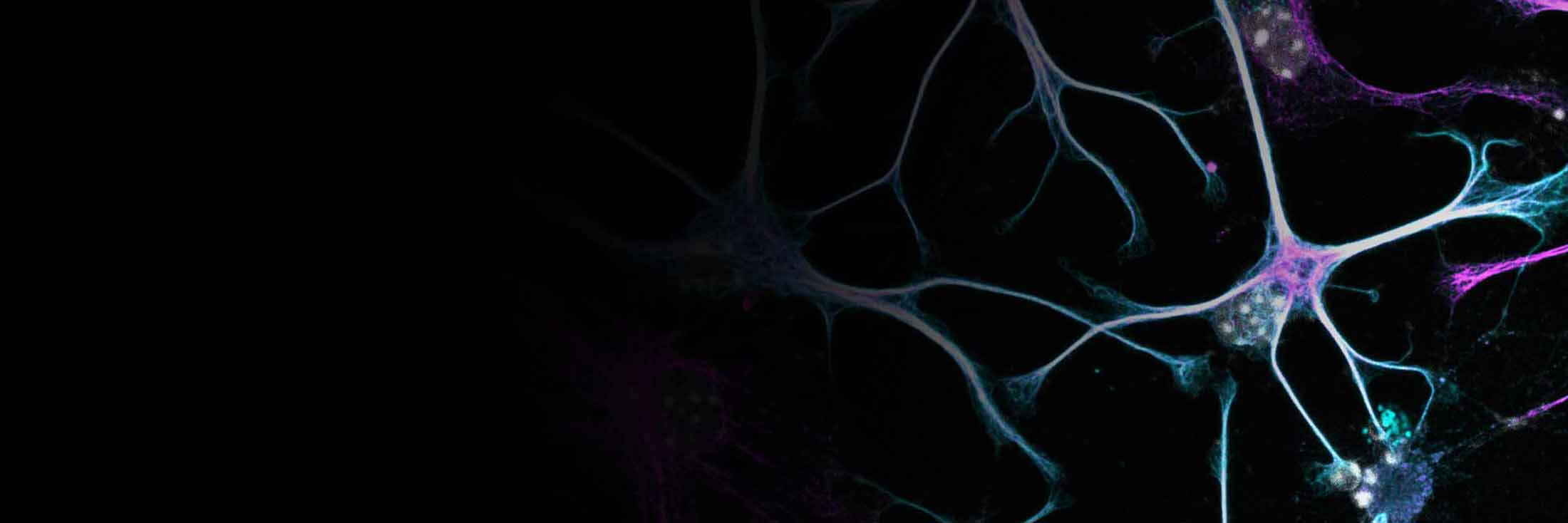
Tereza also emphasized the importance of strong communication between researchers and the core facility team. Twice a year, IOF organizes user forums to update ISTA’s research community about new technologies and operational procedures, ensuring everyone knows how the facility functions and who to contact. She mentioned that IOF also encourages users to share their most beautiful images, which are printed as posters and displayed around campus. “Light microscopy can be very pretty,” Tereza remarked. “We even run contests and share the images on social media to give more visibility to the research happening at ISTA.”
But creating pretty images is not the end goal. Proper image data analysis is crucial, and that is where Tereza’s expertise comes in. IOF provides several workstations equipped with licensed software, and while users are encouraged to handle their own data analysis, Tereza and her colleagues are always available to assist. “We are happy to help with any specific needs or developments,” she said. Teaching users how to apply the code developed by her team and empowering them to become self-sufficient is an essential part of her role.
Tereza places a high value on knowledge sharing within the bioimage analysis community. While many analysis tools are available, not all are free, and custom code is often needed for specific projects. This is why exchanging experiences and ideas with others in the community is so important. Tereza and her colleagues are members of GloBIAS, the global bioimaging analysts’ society, and they have recently launched the Austrian Image Analysis Initiative (AI2), which hosts monthly meetings to encourage knowledge sharing among bioimaging enthusiasts across the country.
She also highlighted the crucial role of networks like Global BioImaging, Euro-BioImaging, and Austrian BioImaging in raising awareness about the work being done at imaging core facilities. These networks not only facilitate knowledge sharing but also help identify expertise and technologies available at other core facilities. For example, thanks to an Austrian BioImaging/CMI workshop, Tereza learned about a STED microscope at VetmedUni in Vienna. If IOF does not have the technology a user needs, they can easily refer them to the Austrian or Euro-BioImaging platforms, where access to up to 120 imaging technologies and services are offered. “It is great to have this wider network,” Tereza said. “It is a win-win situation, supporting collaboration and allowing us to send users to the right place when needed.”
This comprehensive tour of the Imaging & Optics Facility at ISTA provided valuable insights into the services offered and what it is like to work in a core facility. With a focus on service and supporting others, core facility staff help researchers navigate new tools and techniques, saving them time and effort. In return, they get the exciting opportunity to tackle something new and different every day. A big thank you to Tereza Belinova and the IOF team for sharing their time and experiences with me!

Magdalena Schindler
Published:
17 October 2024
Read the article as PDF
